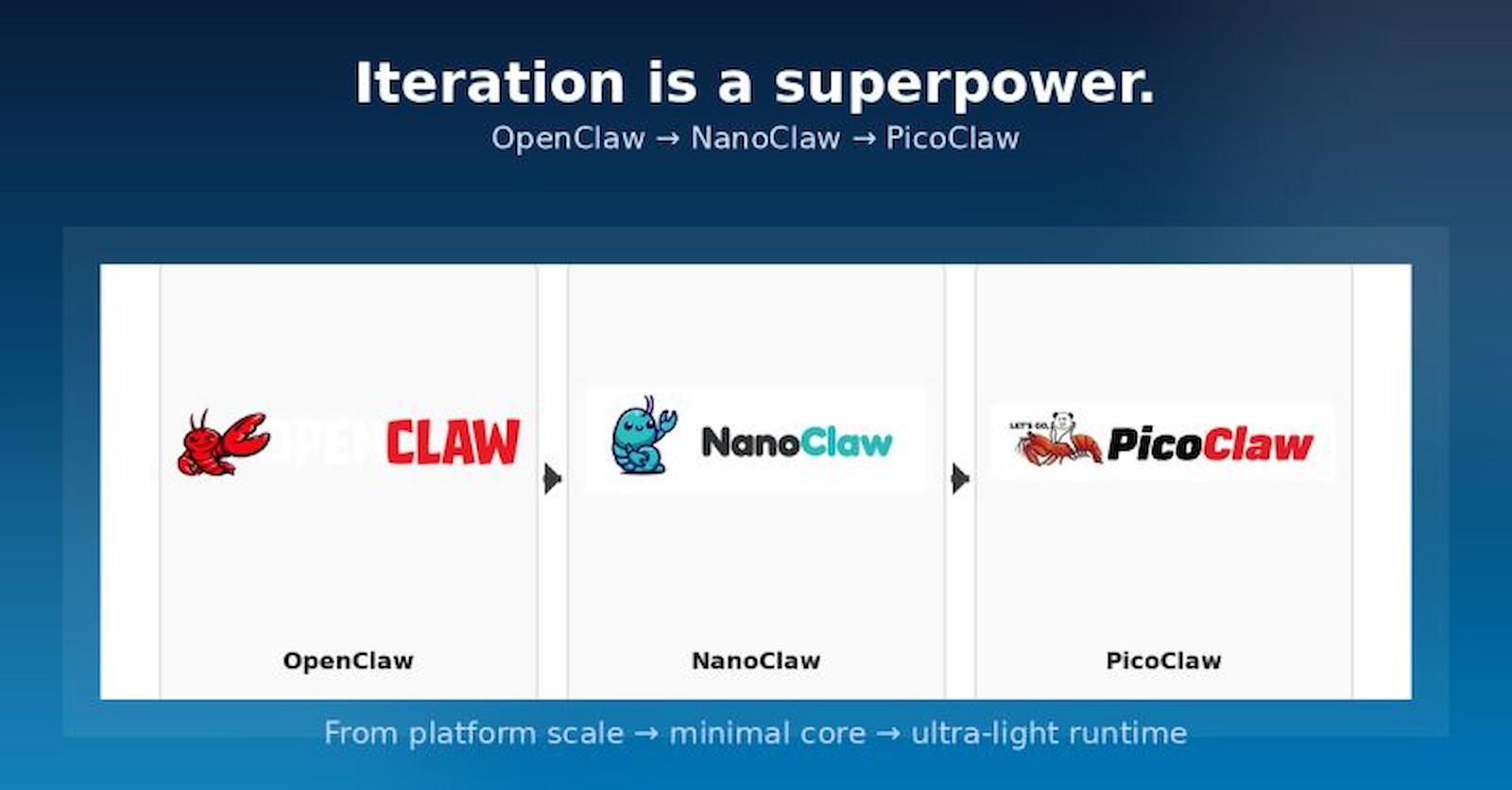
OpenClaw vs NanoClaw vs PicoClaw: Picking the Right AI Agent for Your Setup
The AI agent ecosystem exploded in early 2026. What started with OpenClaw has spawned dozens of alternatives, each with different priorities. If you are trying to pick one, here is a straightforward comparison of the three most popular options.
OpenClaw: The Feature King
149K+ GitHub stars. 10,000+ community skills. Supports 15+ messaging channels. OpenClaw has the most features, the largest community, and the most integrations of any AI agent framework.
The downside is security. The ClawHavoc incident showed that running an agent with full system access and community plugins is risky. OpenClaw is working on sandboxing, but it is not there yet.
Best for: developers who want maximum features and are comfortable managing security themselves.
NanoClaw: The Security Pick
Every session runs in a Docker container. Skills are isolated. The attack surface is minimal. NanoClaw trades some of OpenClaw's feature breadth for genuine security isolation.
The skill ecosystem is smaller, and you need Docker running, which adds resource overhead. But if security matters to you — and it should — NanoClaw is the most responsible choice.
Best for: developers who handle sensitive data or work in regulated environments.
PicoClaw: The Minimalist
10MB of RAM. Sub-second boot. Runs on a $10 board. PicoClaw strips away everything except the core agent loop and does it in Go for maximum efficiency.
No skill marketplace, no browser automation, limited memory. But for a lightweight always-on assistant that answers questions and handles basic tasks, nothing else comes close on resource efficiency.
Best for: embedded deployments, IoT projects, or anyone who wants an agent running 24/7 with minimal resource usage.
Quick Decision Guide
Need everything? OpenClaw. Need security? NanoClaw. Need efficiency? PicoClaw. Need enterprise? NemoClaw (NVIDIA's wrapper around OpenClaw).
Or do what a lot of developers do: run NanoClaw for daily use and keep a PicoClaw instance on a Raspberry Pi for quick queries when you are away from your desk.
Related Posts
Cursor vs Windsurf vs Kiro: AI Coding Agents Compared
A hands-on comparison of Cursor, Windsurf, and Kiro for real development work. Which AI coding editor wins for bug fixes, new features, refactoring, and learning new codebases.
Read more
CrewAI vs AutoGen vs LangGraph: Which Multi-Agent Framework to Pick
A practical comparison of CrewAI, AutoGen, and LangGraph for building multi-agent AI systems. Code examples, strengths, weaknesses, and recommendations for each framework.
Read more
PicoClaw: Running a Full AI Agent on a $10 Board With 10MB of RAM
PicoClaw runs a complete AI agent on less than 10MB of RAM. Built in Go for embedded devices, it connects to cloud LLMs while consuming almost no local resources. Here is what it can do and where it falls short.
Read more